Prabhat Maharjan
Role: Editor and Emotional Impact Writer
Prabhat's task was to polish the text and find any errors and try to enhance clarity in the text to ensure the final output was professional and easy to understand by the reader. Prabhat also wrote sections understanding the human side of the story such as Nirmala's background.
Rujal Maharjan
Role: Social Media Coordinator and Activism & Awareness Writer
Rujal strategized how to reach a wide and broader audience by using hashtags and different catchy captions to raise awareness about the case. Rujal also wrote how readers can help spreading awareness.
Samika Maharjan
Role: Case Analyst Writer
Samika focused on writing the the analysis of the case which included legal aspects and the public reactions. Samika added depth by breaking down the case and the lessons it teaches about systemic issues.
Subarna Thakurathi
Role: Fact-Checker and Narrative Strategist
Subarna developed the storytelling approach for the blog and also advised on how to structure the story. Subarna also verified all the details and facts in the blog.
Prakhyat Ghimire
Role: Co-Writer
Prakhyat supported the lead writer by drafting sections which included introductions, conclusions and any other side topics. His role ensure that no part of the blog was overlooked and needed to be provided additional perspectives.
Role: Lead Writer
Aaron crafted the main idea and content of the blog which helped shaping the narrative and also ensured that all details regarding Nirmala Panta's case were clearly communicated. Aaron took the responsibility of finding the research and team inputs into a compelling story.
1. Research and Background Study
Duration: 2 weeks
Tasks:
- Directed an inside and out survey of Nirmala Panta's case, including news reports, interviews, and legitimate records.
- Explored foundational issues, for example, orientation based viciousness, lawful disappointments, and public fights in Nepal.
- Distinguished key topics: misusing of proof, cultural effect, and the requirement for fundamental changes.
- Achievement: Finish of introductory exploration and recognizable proof of center regions for the blog.
2. Data Collection and Analysis
Duration: 1 week
Tasks:
- Gathered auxiliary information from valid sources like public papers (Kathmandu Post, Republica), NGO reports, and government distributions.
- Examined measurements on orientation based viciousness in Nepal and contrasted them and worldwide patterns.
- Surveyed police reports and public explanations with respect to the Nirmala Panta case to reveal irregularities.
- Achievement: Fulfillment of information assortment and planning of a fundamental construction for the blog.
3. Blog Structure Development
Duration: 3 days
Tasks:
- Framed the principal segments of the blog: Presentation, The Episode, Fundamental Disappointments, Cultural Ramifications, and Suggestions to take action.
- Organized the stream to associate the case's subtleties to more extensive cultural and lawful issues.
- Achievement: Drafted a far reaching blog frame with key contentions outlined.
4. Writing the Frist Draft
Duration: 1 week
Tasks:
- Fostered each part of the blog with an emphasis on narrating and influence.
- Consolidated genuine statements, information, and case-explicit guides to fortify the story.
- Composed profound and scientific segments to offset realities with a human-focused approach.
- Achievement: Finish of the main draft, prepared for input.
5. Peer Review and Revisions
Duration: 4 days
Tasks:
- Imparted the principal draft to colleagues for input on satisfied exactness, tone, and intelligibility.
- Reexamined the blog in light of ideas, guaranteeing lucidity in contentions and profound reverberation.
- Tended to any holes in research or narrating distinguished during the survey cycle.
- Achievement: Reexamined and refined second draft finished.
6. Publication and Promotion
Duration: 2 days
Tasks:
Published the blog on the designated platform (e.g., website, Medium).Coordinated a promotion strategy with social media posts, hashtags, and calls to action.Achievement: Blog published and awareness campaign launched.
Timeline Overview
Introduction
In a world where justice is heralded as a fundamental right the protracted struggle for Nirmala Panta's case serves as a stark reminder of the pressing reality that justice delayed can often feel like justice denied. Since the tragic events surrounding Nirmala. A young girl whose life was cut short and quest for accountability and closure has been riddled with setbacks or bureaucratic hurdles and a palpable sense of despair among her family and the community. In this article we will delve deep into the specifics of Nirmala's case and unravel the layers of injustice and contemplate the broader implications of such delays in the legal system.
The Heartbreaking Background of Nirmala Panta's Case
The story of Nirmala Panta is one that resonates deeply within many communities in Nepal. Nirmala who was just 13 years old was found murdered in 2018 resulted in sparking national outrage and calls for justice.
A Crime That Shocked the Nation
Location & Incident: Nirmala was reported missing from her home in the Kanchanpur district, and her body was discovered in a sugarcane field.
Community Response: The initial investigation was met with skepticism, as community members demanded a thorough and transparent inquiry. Rallies and protests erupted, demanding justice for Nirmala.
"When justice becomes a public outcry, it showcases the collective grief and determination of a people united against injustice."
Despite widespread media coverage and public interest, what followed was a disheartening trail of negligence and procedural failures.
Research Background
The country Nepal has faced and witnessed many cases of gender based violence but yet may similar cases and incidents remain unresolved due to many difficulties like flawed investigations and inadequate frameworks. The case of Nirmala Panta gained a lot of national attention but also showed the flaws in the legal system of the country such as tampering of evidence and the lack of accountability shown by the police. The outcry and public protests made a cornerstone for discussions on gender equality and the change in the system.
Research Objectives
1. Understanding the unsolved case: The main objective of our blog project was to analyze the details of Nirmala Panta's case to understand about the flaws of the legal justice system of our country.
2. Highlighting Systemic Failures: Our team identified any cracks in the law enforcement and judicial system that blocks justice in any gender based cases.
3. Raising Awareness: The next main objective of this blog was to raise awareness among the public so that in the near future such cases might take another turn and does not end up like this one.
4. Promoting Advocacy: Our team tends to advocate for the reform in Nepal's legal and social systems to prevent any further cases as we have seen the lack of accountability shown by the legal teams.
Findings and Discussion
The Legal Labyrinth: A Journey Through Injustice
The aftermath of Nirmala's murder revealed significant flaws within the legal system that hindered the pursuit of justice for her family. The following points illustrate the challenges faced:
Prolonged Investigations
Lack of Evidence Collection: Initial investigations were marked by a lack of forensic rigor, leading to inadequate evidence being gathered.
Political Interference: Allegations of political interference arose, with questions surrounding the integrity of the authorities involved.
Family Struggles
Nirmala's family has faced immense emotional and financial hardship throughout this ordeal.
Psychological Impact: Members of her family have reported struggling with grief and the trauma of uncertainty.
Financial Constraints: Engaging legal representatives and navigating the labyrinth of the judicial system has placed a significant financial strain on the family.
For Nirmala’s family, the pain is immeasurable. Her mother Durga Devi and her father Yagya Raj have been relentless in their pursuit of justice but their cries have often been met with silence or hollow assurances. The loss of a child is an unbearable tragedy, but the added frustration of fighting a system that seems indifferent has only deepened their suffering.
Public Outcry and Calls for Accountability
In response to the injustice surrounding Nirmala's case, various rights organizations have rallied to demand external intervention and transparency:
Media Scrutiny: Ongoing media attention has kept the case alive in the public consciousness, forcing authorities to continue their investigations.
Activist Involvement: Activists have used social media platforms to create awareness and push for a resolution.
The revelation of Nirmala's body sent shockwaves the country over. Fights ejected in different pieces of Nepal, with individuals requesting equity for Nirmala and stricter measures to battle viciousness against ladies and youngsters. "Equity for Nirmala" turned into an energizing cry, joining people from varying backgrounds.
In spite of the public clamor, the case was damaged by gross carelessness and misusing by policing. Proof was purportedly messed with, and honest people were captured and tormented to extricate admissions, further postponing the examination.
Systemic Failures in Justice
- Awkward Examination: From neglecting to safeguard the crime location to altering proof, policing confronted extreme analysis. DNA tests from the scene matched no suspects at first caught, bringing up issues about the examination's respectability.
- Orientation Based Savagery: Nirmala's case is certainly not a separated occurrence. It is important for a more extensive example of brutality against ladies and youngsters in Nepal, where many such cases go unreported or unsettled.
- Absence of Responsibility: Regardless of commitments of quick activity from specialists, equity stays slippery. The absence of responsibility among cops and government authorities extends public doubt in the framework.
Implications of Justice Delayed
The stagnation of Nirmala's case illustrates larger societal issues that necessitate examination. The following aspects underscore the repercussions of delayed justice:
Erosion of Trust in the Justice System
Public Disillusionment: An extended period without resolution can breed cynicism about the ability of the justice system to serve its purpose.
Victim Blaming: Unresolved cases may divert blame toward victims or their families, reinforcing harmful stereotypes and societal stigmas.
Impact on Community Safety
The unresolved nature of such cases can lead to:
Fear and Insecurity: Community members may feel unsafe, as the perpetrator remains at large.
Ineffectiveness in Deterrence: Without justice, potential offenders may believe they can act without consequence.
Call for Reform
Advocating for timely justice and accountability is not just about Nirmala’s case; it emphasizes the need for systemic changes within the legal framework. Key areas for reform include:
Investigation Protocols: Establishing stricter guidelines for evidence collection and interrogation practices.
Victim Support Services: Increasing resources for families affected by violent crime can help mitigate the psychological impacts.
The Fight Continues
While fights have blurred and news inclusion has dwindled, the battle for equity for Nirmala stays alive in the hearts of many. Activists, writers, and residents keep on constraining the public authority to determine the case and convey equity to Nirmala's loved ones.
This case fills in as an obvious sign of the work actually expected to guarantee that no kid, no lady, and no human at any point needs to get through such a destiny once more. It is a source of inspiration for everybody to remain against orientation based savagery, request responsibility from specialists, and work toward making a general public where equity wins.
What Can You Do?
1. Raise Awareness: Readers can share Nirmala's story on social media to keep the conversation alive.
2. Support Victim's Families: Readers can offer any emotional or financial support to the families fighting for justice.
3. Join movements. Readers can get involved with organizations working to combat any gender-based crimes in Nepal.
4. Educate Yourself and Others: Readers can understand the main cause of such crimes and advocate for gender equality and respect.
Self-Reflection
Subrna Thakurathi
There were several upsides to working on this assignment and writing a blog on Nirmala Panta. In my personal opinion, it was much more than any academic task as it involved many aspects of comprehension, respect, and purpose.
In this case, I addressed more thoroughly the disturbing case of Nirmala Panta, and it was both heart-wrenching and interesting. Knowing about similar stories made me realize how certain cases of gender inequality can be overwhelming and latent in every society today. The awareness and the change that these issues shall create are long overdue. There was a lot of research and a lot of blogging contributed. I have to admit that the feelings were rather devastating. It was infuriating to know that justice was so far away, sad that the woman and her family had to go through so much pain, and the insistence that in any case, I had to help raise awareness, if only a little.
What I would consider as another important aspect of this process was working with my team members. It demonstrated the need for following each other, working as a unit, and appreciating one another. Every member contributed on a different level and accrued impressive results from individual inputs. On the other hand, there were also issues such as the adjustment of timescales and the merging of disparate ideas which encouraged me to be more adaptable and tolerant.
From a personal standpoint, this particular project has made me more conscious of the role that I play, however minimally, in bringing about change. It stressed the need to speak up in the face of injustice and the need to use whatever means one has at their disposal to effect such a change. Writing, arranging, and putting together the blog also helped enhance my research and communication skills which I will take forward with me into other projects.
Most importantly, this experience has given me a sense of duty—both as a student and a citizen— in fighting for fairness and justice. It was a privilege for me to be able to work on this project and on which I endeavored to contribute.
Samika Maharjan
In my role as a case analyst writer, I narrow down the scope of this research to the legal and systemic issues that emerged in analyzing the case of Nirmala Panta. In this sense, I pause to think about the objectives that one would be pursuing, if examining these cases and their contexts, for more general conclusions about justice or social responsibility. Furthermore, it would draw attention to my role in providing constructive perspectives that strive to create a society in which such act of brutality do not occur again, no matter how minor the step towards awareness or change might be.
Aaron Gurung
Working on this project was very challenging and made me realize how such cases are starting to increase in our society. As I was the lead writer for this blog I was shocked to find about the lack of accountability shown by the legal teams. And it also showed me the importance of standing against injustice and raising a voice for the voiceless.
Writing this blog made me deepened my knowledge about the complexities surrounding the gender based violence and the urgent need for the systemic change. Moreover, I was also able to hone my skills in research and writing and mainly in public engagement as we had to interact with the public.
Rujal Maharjan
As an awareness writer, I often asked myself: “Am I doing enough to amplify the voices of survivors?” Nirmala’s case serves as a reminder that writing is not just about sharing stories; it’s about igniting meaningful change. Let this blog be a call to action—for readers to educate themselves, demand accountability, and support initiatives that combat violence and promote gender equality. Nirmala Panta’s story is one of immense sorrow but also a catalyst for change. Her name must never be forgotten. By reflecting on her case, we can work toward a society where every individual—regardless of gender—feels safe, valued, and protected. Let us honor her memory by standing united against injustice and fostering a future where no such tragedy ever occurs again. This tragedy not only reflects the deep flaws in our justice system but also highlights the cultural silence surrounding such heinous crimes. Writing about Nirmala’s case is not just about revisiting her story—it’s about drawing lessons, raising awareness, and inspiring action. The widespread protests and global outrage following Nirmala’s death demonstrated the power of collective action. Yet, despite this mobilization, justice remains elusive. This reveals the limitations of short-term activism and emphasizes the need for sustained efforts in advocacy, legal reforms, and grassroots movements to combat gender-based violence.
Prabhat Maharjan As an Editor/Emotional Impact Writer, Since this is the case of Nirmala Panta's needs to be balance between technical precision and empathetic storytelling. I made sure that the text would be clear, professional, and impactful while delving into the human side of the tragedy. The writing on the background and events surrounding the case of Nirmala was both challenging and deeply moving. I focused on telling her story with authenticity and sensitivity, showing the systemic injustices and personal sorrows involved. This furthered my understanding of the power of storytelling in driving awareness and evoking compassion while reminding me of the responsibility to handle such narratives with care and respect.
Prakhyat Ghimire
Working on the blog Justice Delayed, Justice Denied: Nirmala Panta's Case Stands Unresolved has been a deeply moving experience for me as a co-writer. Beyond just crafting introductions and conclusions, I found myself emotionally and intellectually invested in the tragic case and its implications. Diving into the systemic flaws and negligence surrounding Nirmala's story was both heartbreaking and eye-opening. It reinforced how critical it is to amplify voices against injustice and advocate for reform. While the process was challenging, it was fulfilling to contribute to a piece that not only informs but also inspires readers to take action.
This journey also highlighted the power of collaboration. Our team’s synergy, with each member bringing unique skills and perspectives, taught me the importance of unity and adaptability. Merging diverse ideas into a cohesive narrative was no easy task, but it strengthened my ability to communicate and work efficiently. Above all, this project deepened my understanding of advocacy through writing and the role I can play in driving societal change. It was an honor to work on a cause that demands awareness and accountability, and I leave this project with a renewed sense of purpose.
Social Media
In Person Team Meeting
Team Discussion
Conclusion
Nirmala Panta's case remains unresolved, highlighting the persistent struggle against systemic obstacles that prevent justice from being served. As her family grapples with grief and uncertainty, it serves as a clarion call for reform and accountability within society and legal systems alike.
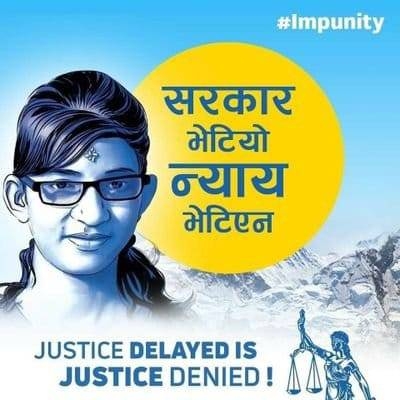
The principle that "justice delayed is justice denied" resonates powerfully here, extending beyond one tragic story to reflect a glaring issue in our collective moral and legal landscape. It is essential for individuals to stay informed and engaged. Only through persistent advocacy and a shared commitment to reform can we hope to bring justice to Nirmala and many others like her.
Recognizing the urgency and importance of resolving such cases is essential. What role do you think the community should play in advocating for justice? Share your thoughts and be part of the conversation.
For more information on the ongoing efforts for justice reform, consider visiting organizations like Human Rights Watch or Amnesty International.


Very Good Case, Justice for Nirmala!
ReplyDeletewe will fight for justice
ReplyDeleteJustice for Nirmala Panta is a call for accountability and reform in our system. We must not let her story be forgotten but use it as a reminder to demand safety and justice for all.
ReplyDeleteThis comment has been removed by the author.
ReplyDeleteJustice for Nirmala Panta
ReplyDeleteJustice delayed is justice denied—Nirmala Panta's silence echoes a nation’s call for accountability and change. #JusticeForAll
ReplyDeletejustice for nirmala panta
ReplyDeleteJUSTICE Great teamwork
ReplyDeleteSo informative blog Justice should be given
ReplyDeleteJustice for nirmala panta
ReplyDeleteJustice should be fought for nirmala pant.
ReplyDeletevery informative blog. justice for nirmala panta
ReplyDelete